
💪 Is Your Athlete Training like a Body Builder or and Athlete? Strength Training: What It Is and What It’s Missing
- Laura Baden
- Oct 6, 2025
- 3 min read

Traditional strength training, especially what you might see in a general gym, often focuses on building muscle size (hypertrophy) or max strength, how much weight someone can lift.

For adult bodybuilders or powerlifters, that makes sense. But for a 13-year-old basketball or softball player, training like that can create problems.
When an athlete’s only goal is to lift heavier, they often miss critical elements like:
Coordination and movement mechanics
Speed and reactivity
Mobility and joint control
Injury resilience
Sport-specific movement patterns
Research supports this distinction. A 2020 study in the Journal of Strength and Conditioning Research found that while traditional strength training increases maximum force output, athletes who combined it with plyometrics, coordination, and movement skill training developed significantly better sport-specific power and agility (Chaouachi et al., 2020).
In other words — lifting more weight doesn’t always mean performing better.
🧠 Athlete Training: Building Strength That Transfers to Sport
Athlete training is about developing the total system — not just one muscle group or lift.
A true athletic performance program develops:
✅ Foundational Strength – The base for power, stability, and control.

✅ Speed & Acceleration – The ability to move quickly in any direction.
✅ Agility & Deceleration – Control during changes of direction (critical for ACL prevention).
✅ Mobility & Stability – Freedom to move efficiently through full ranges of motion.
✅ Coordination & Body Awareness – The neuromuscular control to move with precision.
✅ Power – Converting strength into explosive movement.
✅ Injury Prevention – Building resilient joints and movement patterns.
That’s the kind of holistic training model backed by the Long-Term Athletic Development (LTAD) framework used worldwide. LTAD research consistently shows that early exposure to diverse movement patterns, not early specialization. produces stronger, faster, and more injury-resistant athletes (Lloyd & Oliver, Strength and Conditioning Journal, 2012).
This is the foundation of how we train at Earn the Edge Performance.
⚡ The Science Behind “Training Like an Athlete”
Athletic performance depends on how effectively the body can produce, absorb, and redirect force. A basketball player doesn’t just need strong legs, they need the ability to decelerate under control, then explode upward again. A soccer player doesn’t just need to squat heavy, they need to sprint, cut, and stabilize while changing direction.
That’s why we start every Earn the Edge program by teaching movement patterns: how to hinge, lunge, push, pull, land, jump, rotate, and absorb force safely.
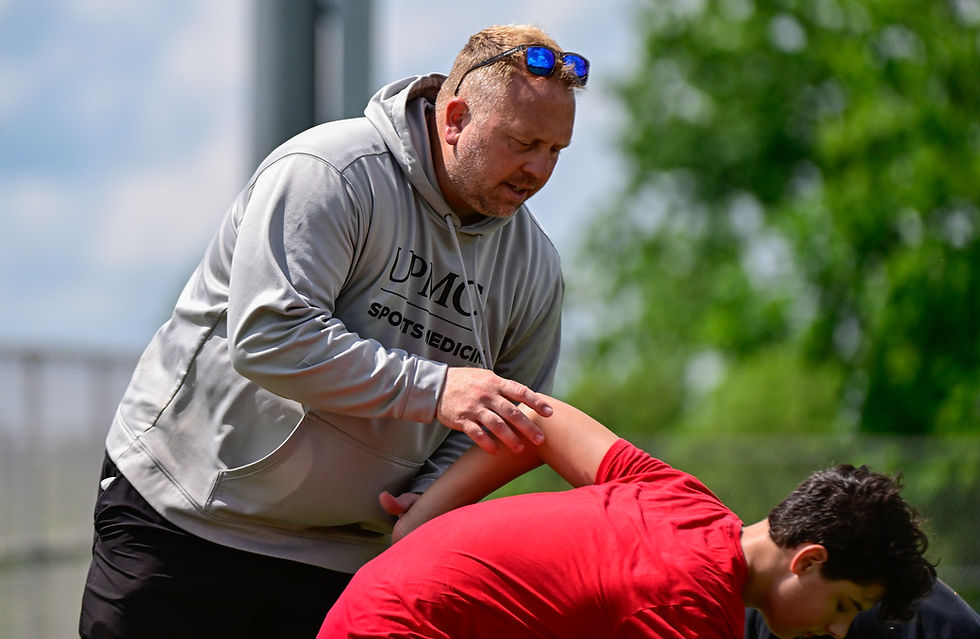
Research shows that proper neuromuscular training reduces ACL injury risk by up to 50% (Lauersen et al., British Journal of Sports Medicine, 2014), and improves coordination, reaction time, and athletic performance across multiple sports.
Simply put: it’s not just what muscles you train, it’s how your body learns to move.
🚫 When Athletes Train Like Bodybuilders
When a youth athlete trains with the wrong focus—chasing max lifts or muscle size—they risk:
Limited mobility and decreased range of motion
Poor movement patterns that don’t translate to sport
Increased fatigue and slower recovery
Higher risk of overuse or growth-related injuries
You might see stronger numbers in the gym… but slower, stiffer, and more injury-prone athletes on the field.
Athletic strength must always serve movement quality and performance, not just numbers on a barbell.
🔍 The Earn the Edge Difference
At Earn the Edge Performance, we don’t do cookie-cutter training. Every athlete starts with a movement and performance assessment to identify weaknesses, imbalances, and areas for growth.
Then we build a customized training plan that follows a progressive model:
Foundational Strength & Stability – Core and joint control to protect the body.
Movement & Mechanics – Teaching efficient, repeatable patterns.
Explosiveness & Power – Translating strength into speed and agility.
Sport Transfer & Performance – Applying everything to real athletic movement.
We combine sports medicine insight with evidence-based performance methods so your athlete not only gets stronger, but moves better, performs better, and stays healthier.
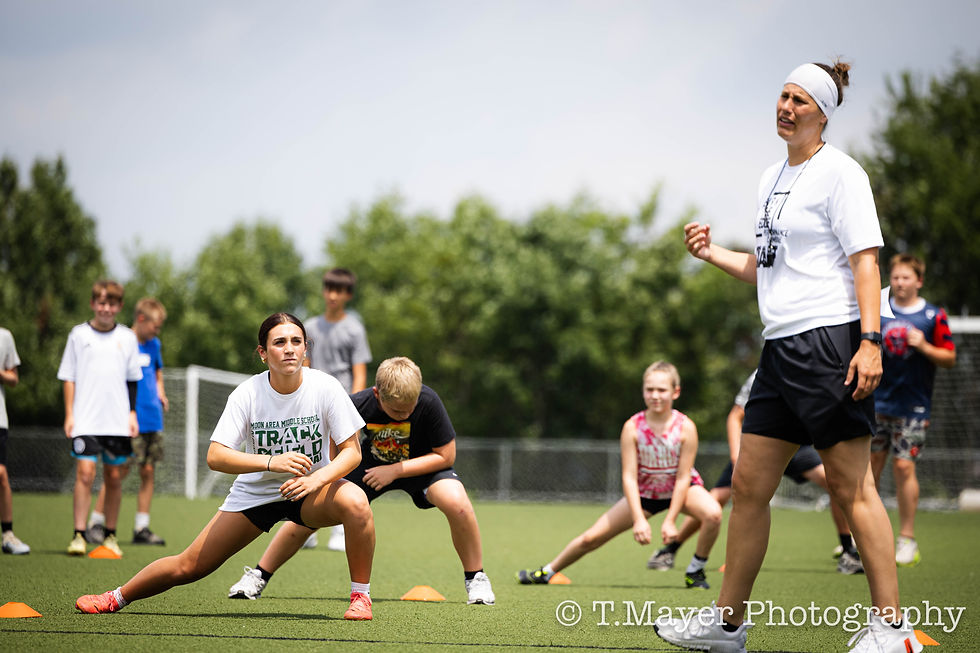
And under the direction of Coach Laura Baden, a former collegiate multi-sport athlete, certified athletic trainer, physician extender, corrective exercise specialist and sports performance enhancement specialist, each athlete benefits from a professional who understands both the science of the body and the art of athletic development.
Coach Laura’s dual background in sports medicine and performance training is what sets Earn the Edge apart in the Pittsburgh area. Few programs blend these disciplines so seamlessly to give athletes every advantage for long-term success.
🔑 Takeaway for Parents
Strength training is important, but athlete training is essential.
If your young athlete is spending time in the gym, make sure it’s with a professional who understands the developmental process, injury risk, and sport-specific demands of youth performance. Your athlete deserves more than “strong.” They deserve to be powerful, coordinated, confident, and resilient.
That’s what we build every day at Earn the Edge Performance.
👉 Ready to learn more? Check out our latest training programs or schedule an athlete assessment today. PROGRAMS | EARNtheEDGE Perform


Comments