
Jump Training for Volleyball and Basketball: Building Explosiveness Without Risking Injury
- Laura Baden
- Sep 22, 2025
- 3 min read

When you watch a volleyball player explode off the floor for a block or a basketball player rise for a rebound, it’s easy to think that vertical jump is all about power. While explosive strength is critical, the science is clear: athletes who skip foundational strength, body control, and deceleration training put themselves at significant risk of injury.
At Earn the Edge Performance, we emphasize not just how high athletes can jump, but how well they can land, control their body, and repeat that movement safely. Here’s what parents need to know before their athlete starts chasing highlight-reel hops.
Why Jumping Is About More Than “Up”

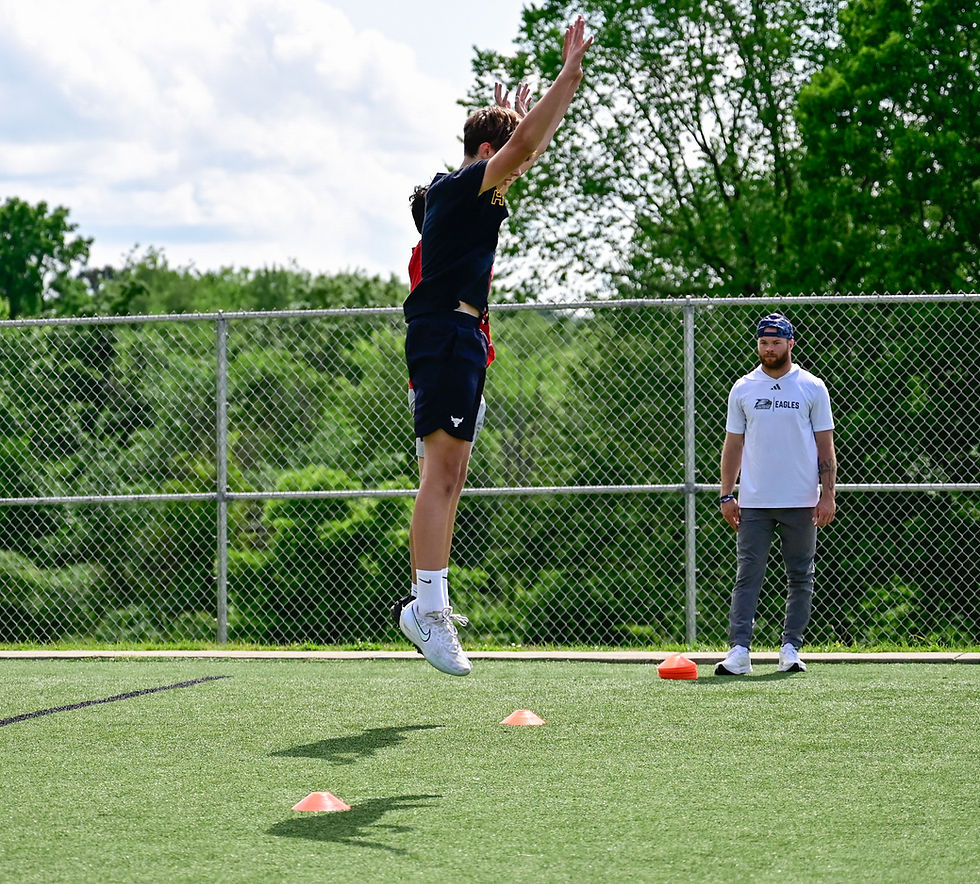
Jumping isn’t just about vertical power, it’s a cycle of force production and force absorption.
Force production = pushing against the ground to create lift.
Force absorption (deceleration) = controlling the body when landing to reduce stress on joints.
Research shows that over 70% of ACL tears occur during landing or deceleration, not during the jump itself (Griffin et al., J Am Acad Orthop Surg, 2000). This makes training proper landing mechanics and body control just as important as explosive takeoffs.
The Role of Deceleration and Body Control
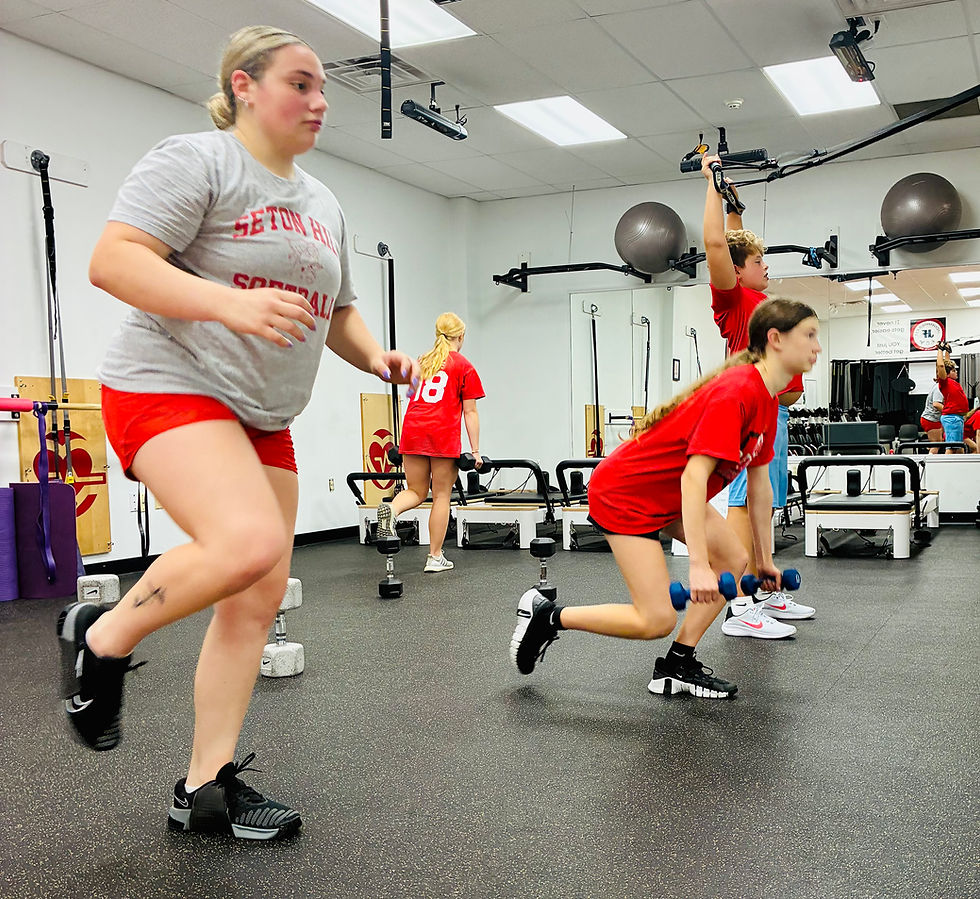
When athletes lack deceleration skills, the body absorbs landing forces in the wrong places, like the knees and lower back. Studies have found that vertical ground reaction forces can be 6–8 times bodyweight during jump landings (McNitt-Gray, J Biomech, 1993). Without proper control, that stress transfers directly into vulnerable structures.
Key risk factors when deceleration is neglected:
Knee valgus collapse (knees caving inward), linked to higher ACL risk.
Excessive trunk lean, which shifts forces to the lower back.
Stiff landings, which increase joint impact and reduce shock absorption.
Teaching athletes to land softly with knees bent, hips back, chest tall, and weight distributed evenly, is the foundation for safe and sustainable jumping.
Why Base Strength Comes First
Explosiveness is built on strength. Without a strong foundation, athletes may rely on joints and tendons instead of muscles to generate and absorb force.

Research supports a progressive approach:
General strength training (squats, lunges, hip thrusts, core stability) builds the base.
Controlled deceleration drills (stick landings, depth drops, lateral hops with pause) teach athletes to manage forces.
Plyometrics (box jumps, bounding, medicine ball throws) add speed and power once strength and control are established.
A study in the Journal of Strength & Conditioning Research found that athletes who followed a structured progression improved vertical jump while reducing landing forces by up to 30% (Myer et al., 2005).

The Risks of Skipping Steps
When athletes go straight into high-volume plyometrics or “jump programs” without base strength and body control, common outcomes include:
Patellar tendonitis (“jumper’s knee”)
Shin splints or stress reactions
Lower back pain
Increased risk of ACL or ankle sprains
Instead of building explosiveness, they’re building overuse and breakdown.
Building Explosiveness Safely: A Step-by-Step Approach
Step 1: Strength Foundation
Focus on proper technique, not load alone
Step 2: Deceleration & Landing Mechanics
Drop-and-stick jumps
Single-leg balance landings
Box step-offs with controlled landings
Step 3: Controlled Plyometrics
Low-level hops, skips, and bounds
Gradually increasing jump height and volume
Step 4: Advanced Explosiveness
Depth jumps, resisted jumps, contrast training
Always built on strength + control foundation
Big Picture for Parents
Jump training is one of the best ways to help volleyball and basketball athletes elevate their performance. But without a plan, it’s also one of the fastest ways to rack up injuries.
When you hear “explosiveness,” think strength + control + progression. That’s how you build athletes who don’t just jump higher, but jump smarter, safer, and for longer.

At Earn the Edge Performance, every program is built on this progression so athletes develop the tools to dominate the court without sacrificing their long-term health.
✅ Want to help your athlete build confidence, control, and explosiveness?
Pair our performance training with the 12-Week Elite Mindset Training Workbook, designed to help athletes manage pressure, stay focused, and lead both on and off the court.


Comments