
The Biggest Mistakes Athletes Make After Physical Therapy Ends

Why “Cleared to Play” Doesn’t Always Mean Ready for Sport
Your athlete finished physical therapy. The doctor says, “You’re cleared.”
Everyone breathes a sigh of relief.
But here’s the truth most families don’t hear:

Completing physical therapy does NOT automatically mean your athlete is ready to return to sport.
It usually means they’ve returned to baseline function, not peak performance, not full resilience, and not full readiness for the speed and chaos of competition.
As a sports medicine and performance professional working with athletes across Pittsburgh, I see this disconnect constantly. Athletes are medically cleared… yet physically underprepared for the demands of sport.
And that’s where re-injuries, performance drops, and confidence issues begin.
Let’s talk about what “cleared” actually means and what needs to happen next.
What Does “Cleared to Play” REALLY Mean?
After injury and rehab, physicians and physical therapists assess:
Pain levels
Range of motion
Basic strength
Ability to jog/jump
Daily functional movement
When those boxes are checked, athletes are often released back to sport.
But here’s the key distinction:

Physical therapy restores baseline function. Sports performance training prepares athletes for game demands.
Those are not the same thing.
An athlete may be cleared to:
run in a straight line
perform basic strength tests
complete controlled movements
But sport requires:
explosive acceleration
rapid deceleration
cutting and change of direction
reacting under fatigue
absorbing contact
unpredictable movement
Being pain-free in a clinic is very different than being ready for a full-speed game.
Why Finishing Physical Therapy Isn’t the Finish Line
Research consistently shows athletes return to sport with lingering deficits:

Strength asymmetries between limbs
Reduced power output
Decreased neuromuscular control
Poor deceleration mechanics
Lower confidence in movement
In fact:
Up to 30% of athletes experience re-injury within a year
ACL re-tear risk increases significantly in the first 12–24 months
Many athletes return before regaining full strength and movement symmetry
Why does this happen?
Because once PT ends, many athletes go straight back to practices and games without a gradual, planned, and progressive return to sport.
Biggest Mistake #1: No Gradual Return-to-Sport Plan
One of the biggest gaps in youth and high school athletics:
Athletes go from rehab → full competition with nothing in between.
A safe return to sport should be progressive and structured, not immediate.

A proper progression includes:
Restoring full strength and symmetry
Rebuilding power and explosiveness
Retraining cutting and deceleration
Increasing workload gradually
Reintroducing sport intensity step by step
Monitoring fatigue and recovery
Without this progression, the body isn’t fully prepared for game stress.
And when workload spikes too quickly, injury risk skyrockets.
Biggest Mistake #2: Stopping Strength & Stability Training
After PT ends, many athletes stop doing:
corrective exercises
strength work
mobility work
neuromuscular training
But those exercises weren’t just for rehab they were addressing the weaknesses that led to injury.
If those deficits return, so does injury risk.
Research shows even small strength imbalances (10–15%) can:
increase injury likelihood
reduce performance
alter mechanics
Athletes should continue structured strength and movement training well after PT discharge.
Biggest Mistake #3: Assuming Pain-Free = Performance Ready
Pain-free does not equal game-ready.

An athlete may feel fine during:
jogging
lifting
basic drills
But struggle with:
repeated sprint efforts
cutting at full speed
reacting under pressure
late-game fatigue
This gap between rehab and sport performance is where many re-injuries occur.
Confidence also plays a role. Athletes returning too quickly often move tentatively, which can actually increase injury risk and decrease performance.
Biggest Mistake #4: No Performance Bridge After Rehab
There should be a clear transition phase between: medical clearance and full competition
This is called a return-to-performance bridge.
It includes:
Strength testing and symmetry restoration
Power and speed development
Movement mechanics retraining
Sport-specific conditioning
Gradual exposure to game intensity
Without this bridge, athletes are essentially guessing their way back.
What a Safe, Progressive Return to Sport Should Look Like

A proper return-to-sport progression should be:
✔ Planned
Not random workouts or jumping into full practices.
✔ Gradual
Increasing intensity and workload over time.
✔ Individualized
Based on injury history, sport, position, and age.
✔ Monitored
Watching for fatigue, compensation, or pain.
✔ Performance-focused
Preparing athletes not just to play — but to perform safely and confidently.
This phase is where true long-term success happens.
Why Earn the Edge Is Built for This Exact Stage
Earn the Edge Performance was specifically designed to bridge the gap between rehab and high-level performance.
Most gyms train healthy athletes.
Most clinics treat injuries.
Very few specialize in the critical transition after physical therapy ends.
That’s where we come in.
Why Pittsburgh-area athletes trust Earn the Edge:
Sports medicine + performance integration
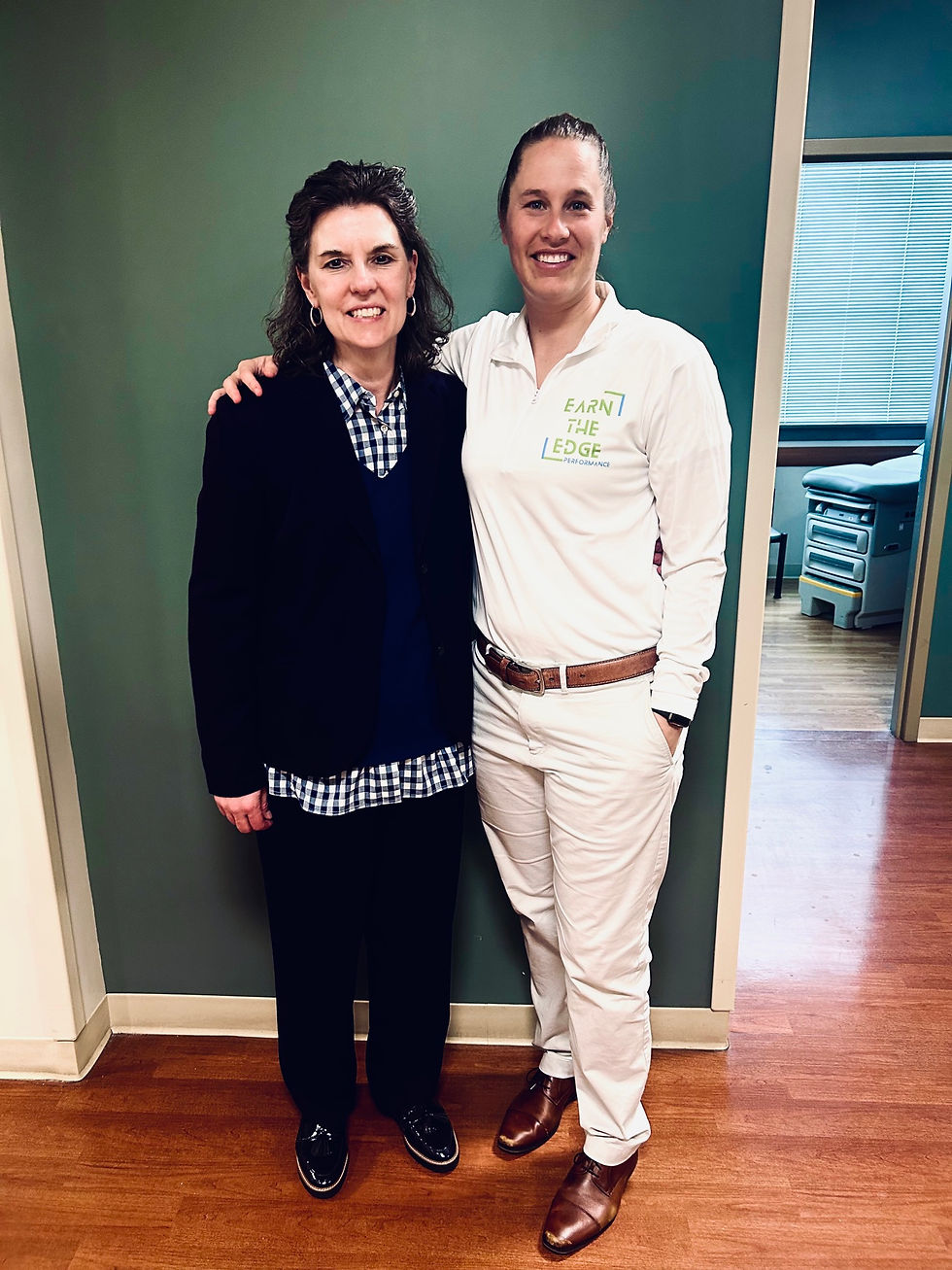
We understand both injury recovery AND elite performance demands. Trusted and referred to by Pittsburgh's TOP sports medicine physicians including the Steelers and Penguins team doctors.
Gradual, planned, progressive return-to-sport programming
Athletes don’t just jump back in, they build back strategically.
Movement analysis and injury-risk screening
We identify lingering deficits that lead to re-injury.
Strength, speed, and neuromuscular training combined
Performance and injury prevention are trained together.
Experience with youth through college athletes
From first-time injuries to high-level return-to-play.
Our goal isn’t just getting athletes back on the field. It’s making sure they return:
stronger
faster
more confident
more resilient
The Bottom Line for Pittsburgh Sports Parents
When a doctor says, “You’re cleared,” the better question to ask is:
“Are they truly prepared for the demands of their sport?”
Because completing physical therapy means your athlete has returned to baseline function. It does not guarantee they’re ready for full-speed competition.
A gradual, structured, and progressive return-to-sport plan can be the difference between: another injury or their strongest season yet.
For Pittsburgh-area athletes who want to return safely, perform confidently, and stay healthy long term, what happens after PT may be the most important phase of all.


Comments