
🏋️♀️ Train Like an Athlete, Not a Bodybuilder Series. Week 1: The Power of Movement Variability
- Laura Baden
- Oct 13, 2025
- 5 min read

Why “Perfect Form Every Time” Isn’t Actually the Goal
While safe movement is essential: especially in loaded or weightlifting activities, the idea of repeating a single, “perfect” version of a movement over and over doesn’t reflect what really happens in sports.
On the field, your athlete’s environment is constantly changing: different opponents, field conditions, fatigue levels, lighting, and reaction demands. No two plays, jumps, or cuts are ever the same. So why would we train in a way that only prepares them for one version of movement?
That’s where movement variability comes in.
What Is Movement Variability?
Movement variability means your athlete can perform the same general skill (like a jump, sprint, or cut) in multiple slightly different ways: adjusting angles, foot placements, or timing, without breaking down.
It’s not about being sloppy; it’s about being adaptable.
📘 Research snapshot: Movement variability allows the nervous system to adapt to ever-changing task and environmental demands, improving both performance consistency and injury resistance.– Stergiou & Decker, 2011, Sports Health

Athletes who move with too little variability are often rigid — and their tissues absorb repetitive stress in the exact same spots. Those with too much variability may appear uncoordinated. The sweet spot is controlled variability — a blend of consistency and flexibility.
Why It Matters for Performance
In games, performance is reactive. Athletes must adjust instantly to unpredictable cues — a defender steps left, a pass bounces off target, or footing shifts slightly.
Movement variability trains the athlete’s brain and body to:
Problem-solve under pressure
React faster to changing conditions
Maintain control even when fatigue or chaos hits
Transfer strength to real-world, sport-specific positions
A rigid athlete might dominate warm-up drills but struggle when a game gets messy. A variable, adaptable athlete maintains power, speed, and control no matter what’s thrown at them.
🧠 Think of variability like mental flexibility, but for the body.
🧠 Why It Matters for Injury Resilience
Every sport has “common injury patterns” knees for soccer, shoulders for volleyball, ankles for basketball. Most of these injuries don’t happen because of one bad rep, but because the body wasn’t ready for an unpredictable or extreme position: a knee collapsing in, an arm getting pulled back, or a foot landing off-balance.
This is where movement variability becomes protection.
When an athlete’s body or a specific joint has “seen that position before," meaning it’s been safely trained and controlled in that range or angle during practice, the nervous system already knows what to do. It’s like having a map for that position. The body can instinctively react, stabilize, and protect itself because it’s not surprised by the demand.
📘 Clinical note: Repeated, variable exposure strengthens proprioception — the body’s internal sense of joint position — and helps it self-organize under stress. When the body has practiced controlling a position in training, it’s more likely to respond safely and efficiently in competition. (Stergiou & Decker, 2011, Sports Health)
Athletes who’ve never trained in those end-range, awkward, or off-balance positions are more likely to panic, lose control, and overload tissues when those same positions happen unexpectedly in sport.
So while traditional programs chase “perfect reps,” we chase preparedness teaching the body to be strong and confident in imperfect positions, because that’s where real sports happen.
📘 Supporting research: Decreased movement variability is linked to higher overuse injury risk. (Hamill et al., J Appl Biomech, 2012) Runners with lower stride-to-stride variability experience more repetitive injuries. (Heiderscheit et al., Med Sci Sports Exerc, 2002)
What Training Movement Variability Actually Looks Like
Here’s how we intentionally build controlled variability at Earn the Edge Performance using principles from sports medicine, biomechanics, and performance science:
1. Variable Environments

We change how the athlete performs a movement:
Same sprint drill → on turf, grass, or court
Change-of-direction drill → with reaction cues (coach’s voice, light, or ball movement)
Balance work → on different surfaces or with visual distractions
🧩 Result: The nervous system learns to adjust joint angles, timing, and coordination quickly, the essence of agility.
2. Variable Constraints
We modify the “rules” of movement to challenge adaptability:
Sprint starts from different positions (kneeling, lateral, split stance)
Lifts done with pauses, tempo changes, or partial ranges
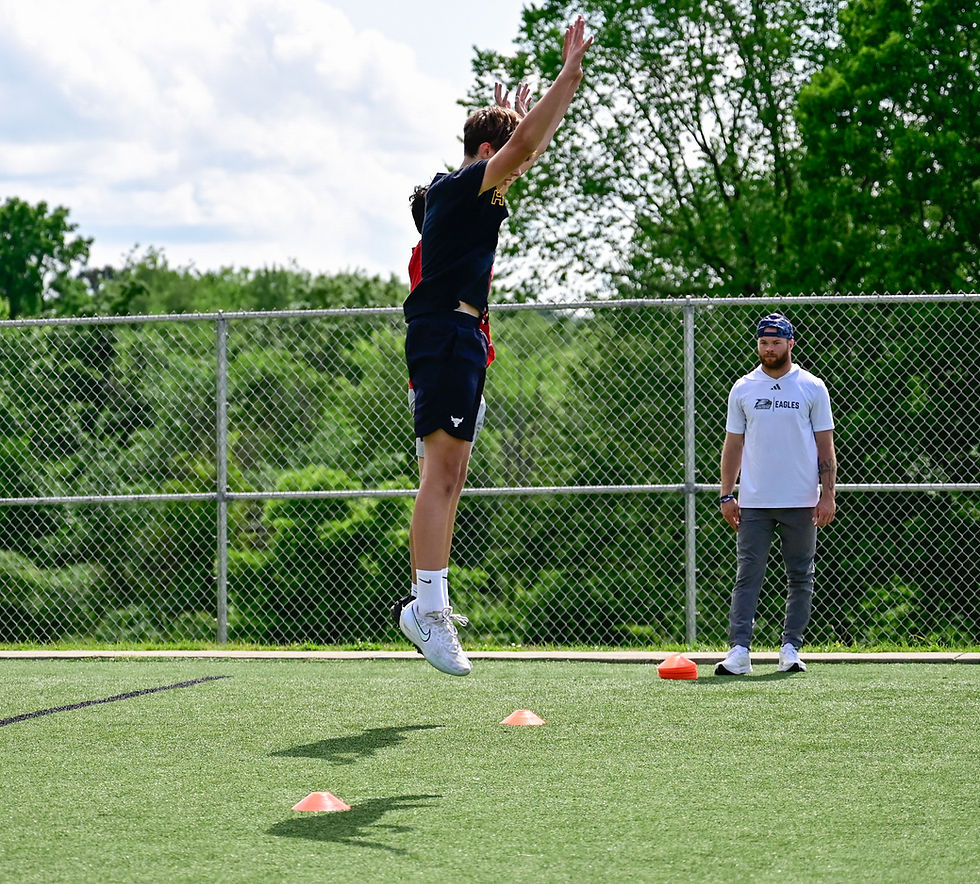
Jumps with different arm actions or reactive landings
🧩 Result: The athlete learns multiple ways to accomplish a task, preparing them for unpredictable sport conditions.
3. Reactive & Perceptual Training
We integrate drills that force quick adjustments:
Tag-style games, mirror sprints, reactive cone drills
Partner perturbations during stability work (gentle pushes or towel pulls)
🧩 Result: Builds dynamic stability, the ability to stay strong while adjusting.
4. Pattern Variation in Strength Work
Even in the weight room, variability matters:
Rotate squat stances (narrow, wide, split)
Mix grip variations for pressing and pulling
Alternate between bilateral and unilateral lifts
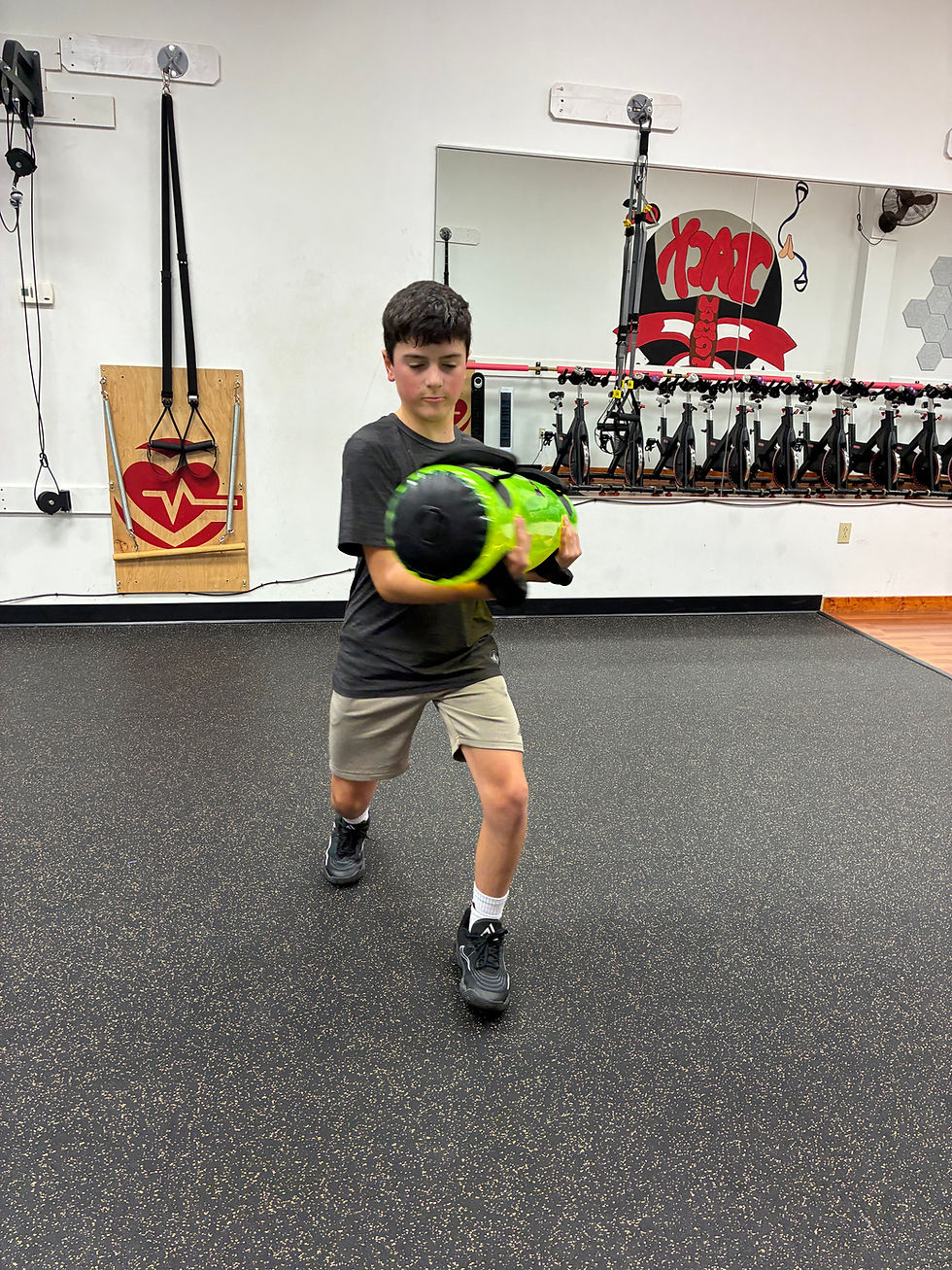
Add offset loading (single kettlebell or dumbbell front rack)
🧩 Result: The athlete’s strength applies across multiple planes and angles, not just one “gym-perfect” pattern.
5. Fatigue & Energy System Variability
Sports rarely demand effort at one pace. We integrate:
Conditioning intervals of mixed durations and intensities
Controlled fatigue exposure, learning to move well when tired
🧩 Result: Under stress, athletes maintain mechanics instead of breaking down,
a huge injury-prevention benefit.
🔑 Keys for Parents of Pittsburgh Athletes
✅ Watch your athlete’s sessions. If every rep looks identical: same tempo, same position, same surface, they might not be developing adaptability.
✅ Ask their coach: “How are you helping my child learn to move well in different situations?”
✅ Don’t equate ‘harder’ with ‘better.’ True athletic training builds control, adaptability, and awareness, not just heavier lifts or longer workouts.
✅ Look for signs of creativity. Kids who enjoy challenge, new drills, and playful variability are developing athletic intelligence, a foundation for lifelong movement health.
Why Earn the Edge Performance Trains Differently
At Earn the Edge Performance, we’re not just making stronger athletes, we’re building Better Athletes and resilient movers.
Where many programs in Pittsburgh focus on “bigger, faster, stronger,” we focus on:
Evidence-based programming that integrates variability, not just volume and intensity.
Movement assessments that individualize every plan.
A balance of structure and chaos teaching athletes to move well when things go wrong
Education helping athletes understand why each drill exists
That’s why our athletes don’t just perform better they stay healthier, longer.
💬 Call to Action
DM us If you want your athlete to train smarter, move better, and stay healthier.

Comments