
Why Do ACL Injuries Keep Happening and How Can Pittsburgh Athletes Prevent Them and Return to Sport Safely?
- Laura Baden
- Jan 26
- 4 min read

ACL injuries are one of the most common and devastating injuries in youth, high school, and collegiate sports. Despite improved surgical techniques and rehabilitation protocols, ACL tears, and re-tears, continue to occur at alarming rates, especially in cutting and jumping sports like soccer, basketball, volleyball, football, and lacrosse.
For Pittsburgh athletes training year-round, the question isn’t just “How do we fix ACL injuries?” It’s “Why are they happening and what actually works to prevent them?”
What Is the ACL and Why Is It So Important?
The anterior cruciate ligament (ACL) is one of the primary stabilizing ligaments of the knee joint. It runs from the femur to the tibia and is responsible for controlling:

Forward movement of the tibia (shin bone)
Rotational stability of the knee
Knee control during high-speed, multi-directional movement
Beyond structural support, the ACL plays a critical role in proprioception and neuromuscular control. It provides feedback to the brain about joint position and load, allowing muscles to react quickly during
sport.
When the ACL is injured, athletes don’t just lose ligament stability they lose coordinated movement control, which is why reinjury risk remains high if training doesn’t address movement quality.
How Do ACL Injuries Happen?
Non-Contact ACL Injuries
Research shows that 60–70% of ACL injuries occur without contact. These injuries most often happen during:

Jump landings
Cutting or pivoting
Sudden deceleration
Direction changes under fatigue
Common biomechanical contributors include:
Dynamic knee valgus (knee collapsing inward)
Quadriceps dominance with limited hamstring activation
Poor hip and trunk control
Stiff, upright landings with high ground-reaction forces
Female athletes sustain ACL injuries at 4–6 times the rate of males in comparable sports largely due to neuromuscular and biomechanical factors, not weakness or lack of effort.
Contact ACL Injuries
Less commonly, ACL tears result from a direct blow that forces the knee into valgus and rotation.
Key takeaway: Most ACL injuries are movement-related and many risk factors are modifiable.
ACL Surgery and Recovery: What Athletes and Parents Need to Know
ACL Reconstruction
Athletes who want to return to pivoting and cutting sports typically undergo ACL reconstruction, where the torn ligament is replaced with a graft (patellar tendon, hamstring tendon, quadriceps tendon, or allograft).

Surgery restores structural stability, but it does not automatically restore:
Strength symmetry
Neuromuscular control
Movement efficiency
Confidence in sport situations
That work happens after surgery or sometimes, not at all.
Typical ACL Rehab Timeline (and Why Time Alone Isn’t Enough)
Evidence-based recovery generally follows this progression:
0–3 months: Restore range of motion, reduce swelling, regain basic strength
3–6 months: Progressive strength training and neuromuscular control
6–9 months: Advanced agility, deceleration, and sport-specific movement
9–12+ months: Criteria-based return to sport
Athletes who return to sport before 9 months post-surgery have been shown to be up to 7 times more likely to tear an ACL again either the reconstructed knee or the opposite side.
Return to sport should be earned, not rushed.
The Most Common Return-to-Sport Mistakes After ACL Injury
Clearing athletes based on time, not performance
Persistent strength asymmetries (especially quadriceps and hamstrings)
Lack of high-speed neuromuscular training
Skipping cutting, deceleration, and fatigue-based drills
Ignoring psychological readiness and confidence
These mistakes are a major reason secondary ACL injuries remain so common.
High-Risk Movement Patterns That Increase ACL Injury Risk
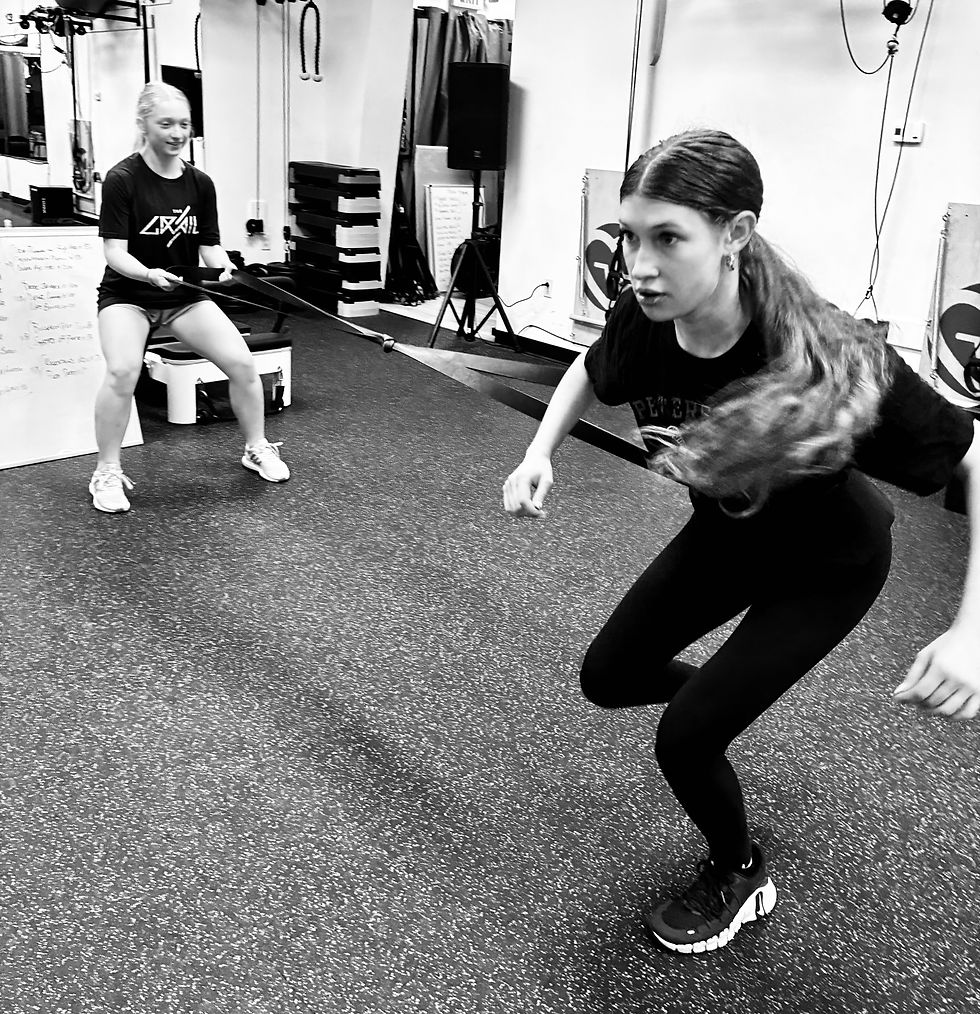
Athletes who demonstrate the following patterns are at higher risk for both initial and repeat ACL injuries:
Knee valgus(knee falls inward) during landing or cutting
Limited hip and knee flexion (stiff movement strategies)
Poor trunk control during deceleration
Delayed hamstring activation
Loss of movement quality under fatigue
The good news: these patterns are trainable.
What the Research Shows About ACL Injury Prevention Programs
Well-designed neuromuscular and strength training programs consistently show:
50–70% reduction in ACL injury risk in youth and adolescent athletes
Improved jump-landing mechanics
Reduced knee valgus angles
Better hamstring activation
Lower reinjury rates after ACL reconstruction
Post-ACL athletes who complete structured return-to-sport neuromuscular programs show:
Return-to-sport rates as high as 90–95%
Secondary ACL injury rates as low as 2–5%
Training quality, not just rehab completion, is the difference.
Why Earn the Edge Performance Is a Trusted ACL Injury Prevention Resource in Pittsburgh
In the Pittsburgh area, many athletes train year-round with multiple teams, private skill coaches, and packed competition schedules. What’s often missing is intentional physical preparation that prioritizes long-term joint health.
Earn the Edge Performance was built specifically to address that gap.

A Sports Medicine Informed Performance Model
Every program integrates:
Movement screening and risk identification
Evidence-based strength training
Neuromuscular control development
Jump-landing and deceleration mechanics
Fatigue-resistant movement strategies
This mirrors what ACL research shows is most effective not just for injury prevention, but for athletic performance.
Proactive ACL Injury Prevention
Rather than reacting after injury, Earn the Edge Performance focuses on:
Teaching athletes how to move safely and efficiently
Developing strength before speed
Preparing athletes for the demands of sport, not just workouts
Bridging the Gap After Physical Therapy
For post-ACL athletes, Earn the Edge Performance provides the missing link between rehab discharge and real-world sport demands helping athletes return stronger, more confident, and better prepared than before.
Final Takeaway for Pittsburgh Athletes and Parents
ACL injuries are not random.
✔ Most occur during predictable movements
✔ Many risk factors are modifiable
✔ Strength and neuromuscular training works
✔ Safe return to sport requires preparation, not JUST patience
For athletes who want to compete at a high level without sacrificing knee health, education-driven performance training matters.
Move better. Train smarter. Earn the edge.

Comments